Why Frictionless Checkout is the Most Important Ecommerce Trend in 2026
Frictionless checkout is driving higher conversion and AOV in 2026. Learn how ecommerce brands reduce checkout friction to increase revenue.

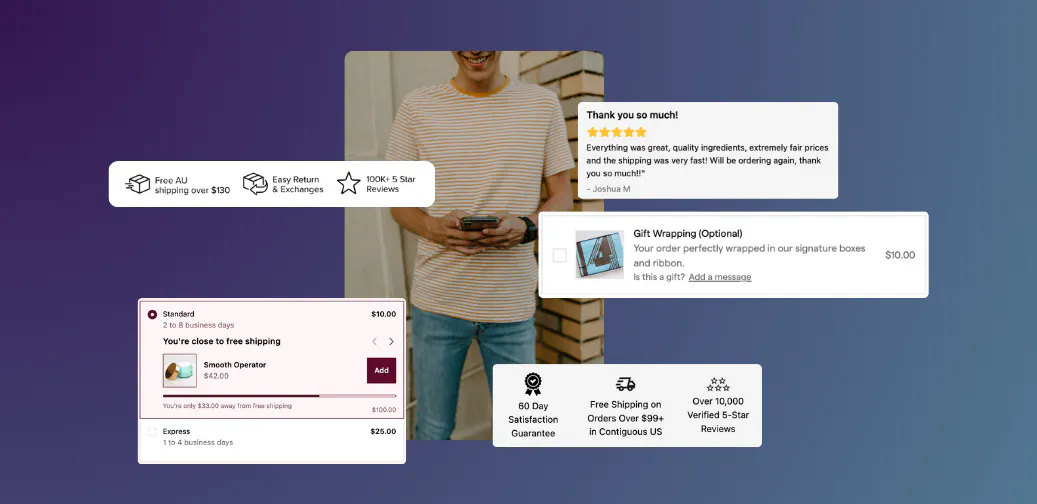
In ecommerce, growth doesn’t always come from more traffic.
Increasingly, it comes from removing friction at checkout.
In 2026, frictionless checkout has become one of the most important levers for improving conversion, average order value (AOV), and overall customer experience. As acquisition costs rise and shoppers become less patient, brands that optimise checkout are consistently outperforming those that don’t.
This article breaks down what frictionless checkout really means, why it matters now, and how brands can implement it without a replatform.
What Is Frictionless Checkout?
A frictionless checkout removes unnecessary effort from the buying process. This includes:
- Fewer form fields
- Clear shipping and pricing information
- Fast load times
- Relevant, well-timed upsells (not distractions)
- No surprises at the final step
In simple terms: the checkout should help customers finish, not think.
Why Frictionless Checkout Matters More Than Ever
Several macro trends are converging at checkout:
1. Shoppers Are Less Patient
Mobile shopping dominates ecommerce, and mobile users abandon checkout faster when:
- Forms are long
- Messaging is unclear
- Load times are slow
Checkout is no longer the place to “explain later”.
2. Traffic Is More Expensive
With rising paid media costs, brands must extract more value from existing traffic. Improving checkout performance often delivers:
- Higher conversion rates
- Higher AOV
- Faster ROI than top-of-funnel spend
3. Checkout Is Now Customisable
Modern platforms, such as Shopify, allow brands to:
- Add content directly into checkout
- Personalise by cart, customer, market, or language
- Test and optimise without the need for a developer
This means checkout is no longer a static endpoint, it’s an optimisation surface.
Common Sources of Checkout Friction
Some of the most common friction points we see include:
- Unclear free shipping thresholds
- Missing delivery or returns messaging
- Irrelevant upsells shown to all customers
- No reinforcement of trust or value at the final step
Each of these increases hesitation, and hesitation kills conversion.
How Checkout Components Supports Frictionless Checkout
Checkout Components helps brands reduce friction by:
- Showing relevant upsells only when they make sense
- Carrying key messaging (free shipping, promos, trust) into checkout
- Personalising content based on cart logic, customer behaviour, and market
- Keeping checkout fast and aligned with Shopify performance standards
The result is a checkout that feels helpful, not pushy.
Key Takeaway
In 2026, the best-performing ecommerce brands treat checkout as a conversion engine, not a form.
Frictionless checkout isn’t about removing everything, it’s about removing anything that doesn’t help the customer complete their purchase.
FAQ
What is frictionless checkout in ecommerce?
Frictionless checkout removes unnecessary steps, confusion, or delays that prevent customers from completing a purchase.
Does checkout optimisation really improve revenue?
Yes. Even small improvements in checkout conversion and AOV can outperform large increases in traffic.

Alex Lawson
An outcomes-driven marketing and growth leader with 15+ years of experience across B2B, B2C, retail, and FMCG, specialising in demand generation, digital strategy, and strategic partnerships. Proven track record in driving revenue growth, go-to-market strategies, and brand positioning, with expertise in account-based marketing (ABM), eCommerce, and integrated digital projects. Adept at simplifying complexity, fostering high-impact collaborations, and delivering measurable business results.