How Shopify Checkout Personalization Increases AOV
Checkout personalization lifts AOV by targeting customer segments with relevant offers. Here's how it works on Shopify Plus.
Ask any Shopify Plus merchant what their average order value is and they'll give you one number. Ask them what their checkout conversion rate is and they'll give you one number.
Both numbers are hiding the truth.
The Problem with One Number
A VIP customer in Australia with a $200 cart and five previous orders has completely different buying intent than a first-time guest customer in New Zealand with a single item and a discount code.
When you measure one AOV and one conversion rate, you're averaging these two entirely different behaviours into a single metric. It's like measuring the average temperature of a hospital and concluding everyone's fine.
Our analytics platform (which collects data via an official Shopify pixel) shows significant behavioral shifts between customer segments based on cart item count, order history, market, and customer tags. Every customer has different buying intent, and the data proves it.
Checkout Is the Only Guaranteed Touchpoint
Here's the uncomfortable truth: customers are no longer following the traditional journey.
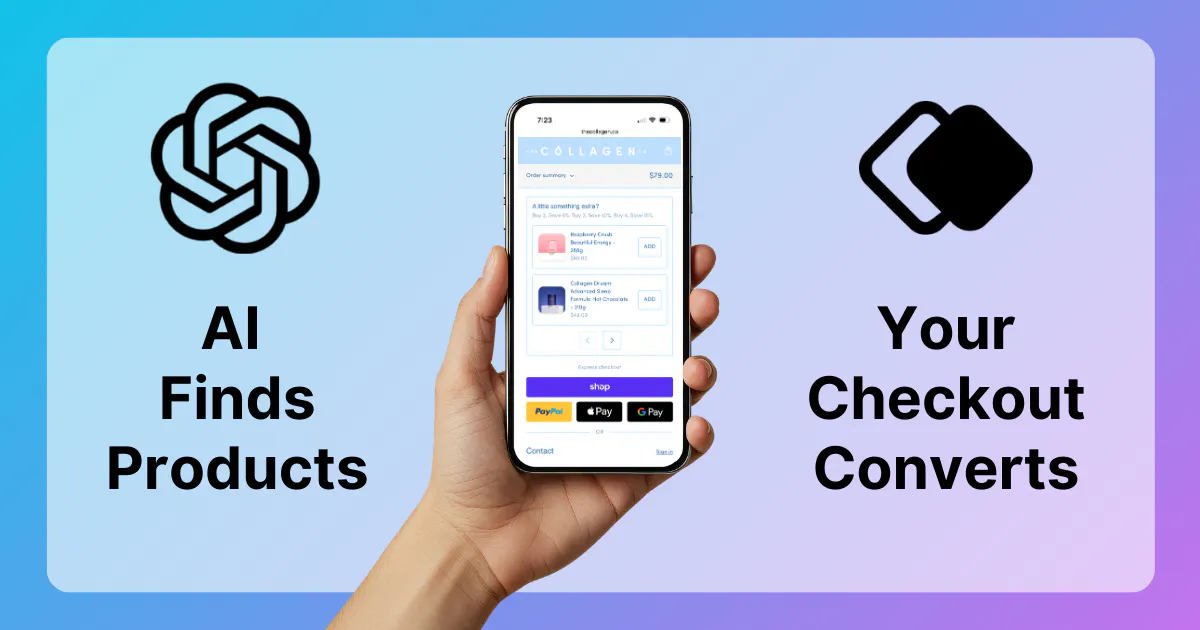
The old path was homepage, campaign content, product page, checkout. Today, many customers skip straight from a product page to checkout. And with agentic commerce, where AI agents handle product discovery, some customers are going directly to checkout without ever seeing your storefront.
Shopify has leaned into this hard. Their Catalog API now gives AI agents access to billions of products. Their Agentic Storefronts feature lets merchants syndicate to ChatGPT, Gemini, and Copilot with a single toggle. And the Universal Commerce Protocol (UCP), co-developed with Google, defines how agents discover products and initiate transactions.
Meanwhile, OpenAI just pulled back its Instant Checkout feature inside ChatGPT. Users were browsing and researching but not completing purchases inside the chat. The takeaway? AI agents are becoming the discovery layer, but checkout stays with the merchant. That makes your checkout experience more important than ever.
All that investment in homepage banners, collection page merchandising, and campaign landing pages? It's at risk. Checkout is becoming the only guaranteed touchpoint.
What Checkout Personalization Actually Looks Like
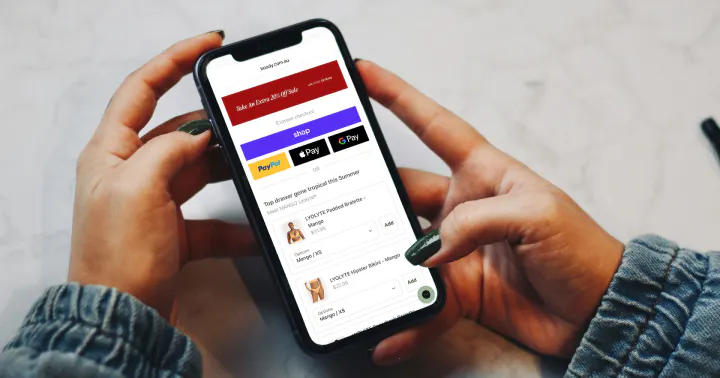
Checkout personalization isn't just adding an upsell widget. It's building distinct checkout experiences for distinct customer segments.
Imagine this: a customer in Australia with a cart value above $100 and a VIP customer tag sees a curated set of premium accessories as upsells, a loyalty points reminder, and a trust badge. A first-time customer from New Zealand with a discount code sees free shipping messaging, a social proof banner, and a complementary product suggestion at a lower price point.
This is conditional rendering with AND/OR logic, combining cart data, customer data, product data, shipping information, and Shopify market data to determine what each customer sees at checkout.
Segments, Not Just Conditions
The next evolution is segment-level checkout. Rather than attaching conditions to individual components, you define customer segments at the top level and then assign component sets to each segment.
Create a segment for "VIP customers in APAC with high-value carts." Assign trust badges, premium upsells, and a loyalty redemption prompt. Create another segment for "First-time international buyers." Assign shipping FAQ, social proof, and entry-level cross-sells.
Then measure each segment independently. What's the AOV for your VIP APAC segment? What's the conversion rate for first-time international buyers? Now you have actionable data, not a blended average that helps no one.
The Revenue Honesty Problem
One thing that matters to us deeply is honest attribution. Many upsell tools use loose attribution models. We take a different approach. When a customer adds a product through our upsell component at checkout, we attach a line item attribute to that specific line item. We listen to order create webhooks and only count revenue where that attribute exists.
When we say we contributed to revenue, we mean it.
What the Data Shows
Merchants using segment-based checkout personalization are seeing measurable results. Boody lifted AOV by $26 AUD on upsell orders and averaged 53x ROI across three storefronts. Bon Maxie drove over 800 additional product sales at checkout in 75 days, delivering a 60.5x ROI. MANTLE achieved their first upsell within 90 minutes of setup and reached a 34.5x ROI with a $32 AOV uplift.
Getting Started
- Identify your top three to five customer segments based on order history, geography, and cart behaviour.
- Audit your current checkout: what content, upsells, and fields are you showing? To whom?
- Implement conditional rendering that matches the right offers to the right segments.
- Measure AOV and conversion rate by segment, not as a blended number.
- Iterate every two weeks based on the data.
The checkout conversion problem isn't that rates are inherently low. It's that most merchants are showing every customer the same checkout and wondering why it underperforms.

Blake Waldron
A software engineer with over a decade in ecommerce and 400 Shopify builds delivered under his leadership at a Shopify Platinum Partner. Created Checkout Components out of pure passion which now supports over 600 Shopify Plus stores around the world.